Why welfare isn't winning elections in India like it used to
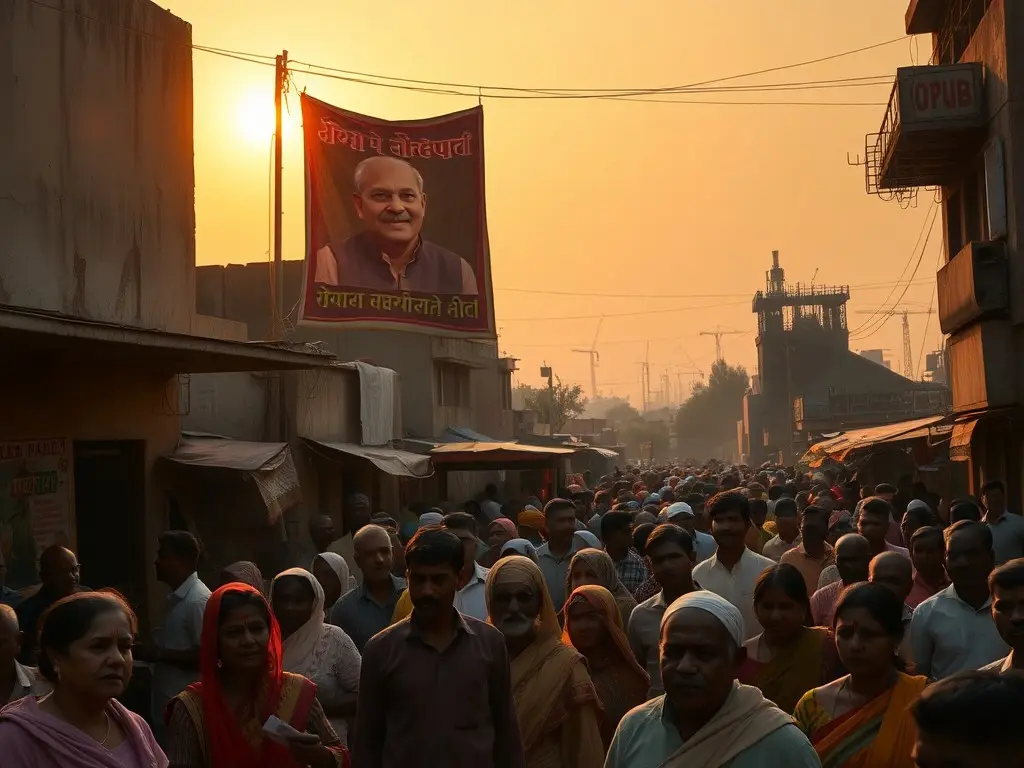
India’s once-effective welfare schemes, including cash transfers and women-focused programs, are no longer guaranteeing electoral wins as parties like DMK, TMC, and Congress-led UDF face losses despite expansive welfare delivery. Political scientist Bhanu Joshi argues that welfare has become the baseline of Indian politics, with elections now decided by additional factors like coalition-building and administrative efficiency rather than welfare alone.
India’s welfare-driven political model, once a competitive advantage for regional parties, is losing its electoral magic as governments across the spectrum—from the Dravida Munnetra Kazhagam (DMK) in Tamil Nadu to the Trinamool Congress (TMC) in West Bengal and the BJP in Assam—compete primarily on expanding benefits rather than ideology. Recent state elections saw the DMK ousted in Tamil Nadu, the TMC defeated in West Bengal after three terms, and the Congress-led UDF returning to power in Kerala despite the Left Democratic Front’s extensive welfare record. Political scientist Bhanu Joshi attributes the shift to welfare becoming the ‘floor’ of Indian politics, with elections now hinging on what parties add beyond it. In West Bengal, the TMC’s coalition of welfare delivery, women voters, Muslim support, and Hindu backing may have fractured, contributing to its loss to the BJP. Meanwhile, the BJP’s rise in Assam relies on welfare schemes, administrative efficiency under Chief Minister Himanta Biswa Sarma, and broader political messaging. Women remain central to India’s welfare architecture, both as reliable voters and managers of household spending, with states targeting cash transfers—over 2,000 programs nationwide—to them. The Ministry of Finance’s Economic Survey projects $18 billion in unconditional cash transfers for 2025-26, though the fiscal strain is evident: states are borrowing heavily to fund recurring payouts, risking cuts to roads, schools, and job creation. The survey warns that welfare spending now consumes over 60% of state revenues, crowding out capital investment. While transfers support poorer households—accounting for up to half of rural consumption for some—analysts caution that unsustainable debt could undermine long-term growth. The shift reflects voters’ evolving priorities, with welfare no longer a decisive factor in isolation.
This content was automatically generated and/or translated by AI. It may contain inaccuracies. Please refer to the original sources for verification.