Will AI Turn Into A Political Battle Over Jobs?
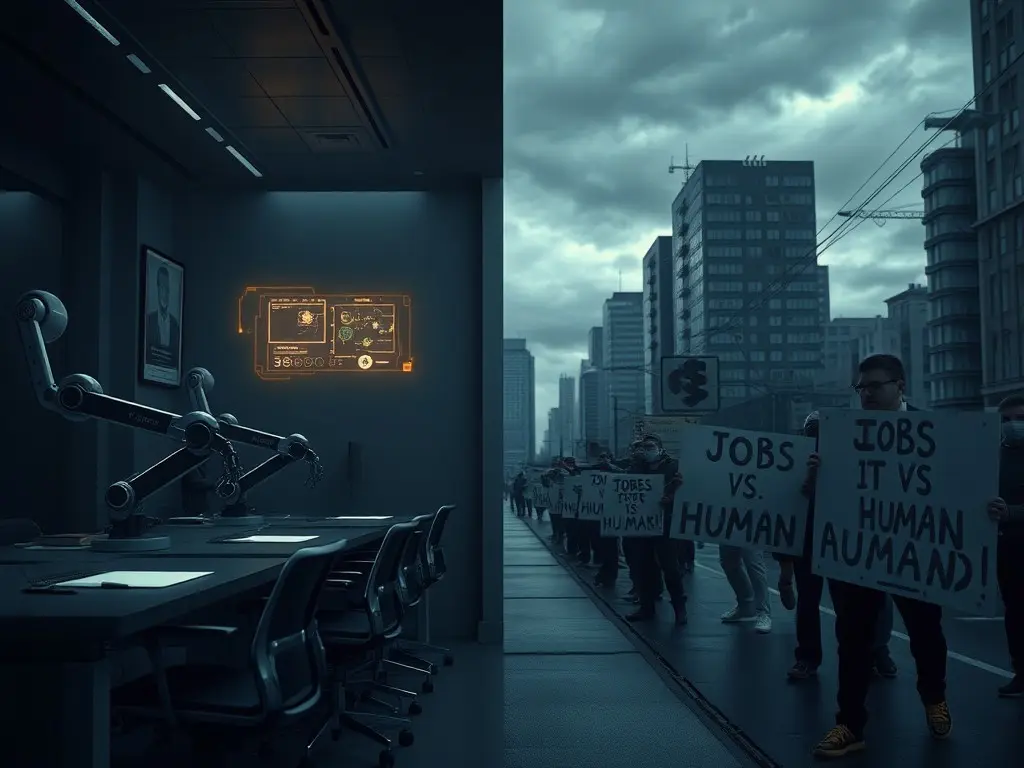
Democratic strategist Rob Flaherty warns AI-driven job displacement could become a major U.S. political issue, citing Goldman Sachs and IMF reports estimating 300 million and 40% of global jobs respectively may face automation risks. Analysts like Jai Mrug highlight that middle-layer white-collar roles, rather than physical labor jobs, are most vulnerable to AI disruption, potentially reshaping labor markets and voter anxieties.
Democratic strategist Rob Flaherty, former deputy campaign manager for Kamala Harris in the 2024 U.S. presidential election, has warned that AI’s rapid advancement could transform job displacement into a defining political issue. Flaherty argues politicians may underestimate voter concerns, as AI threatens roles across sectors. Goldman Sachs estimated in 2023 that generative AI could expose 300 million full-time jobs globally to automation, while the IMF projected nearly 40% of worldwide jobs may be affected. The IMF clarified that AI will likely automate specific tasks rather than fully replace workers, but the scale of disruption remains significant. Analysts like Jai Mrug suggest AI’s impact will vary by economic tier, with middle-layer white-collar jobs—such as audit and IT services—facing the most immediate pressure. Unlike past automation waves targeting manufacturing or low-skilled labor, AI now threatens higher-paying knowledge roles, including analytical and middle-management positions. Mrug notes that elite, specialized roles requiring original intellectual property and strategic expertise may remain insulated, while physical service jobs like bartending or delivery work could persist due to human interaction needs. The shift in automation risks upward could reshape labor markets, particularly in service-heavy economies like the U.S. Political anxiety may grow as voters grapple with job insecurity, potentially influencing elections. In India, economists like Abhirup Sarkar argue AI’s impact will differ due to distinct economic structures, with lower-tier physical jobs potentially less affected than middle-class white-collar roles. The debate highlights how AI disruption could polarize political discourse, blending economic and technological concerns into broader societal debates.
This content was automatically generated and/or translated by AI. It may contain inaccuracies. Please refer to the original sources for verification.