World Environment Day: Why poor South Africans face the worst climate disasters
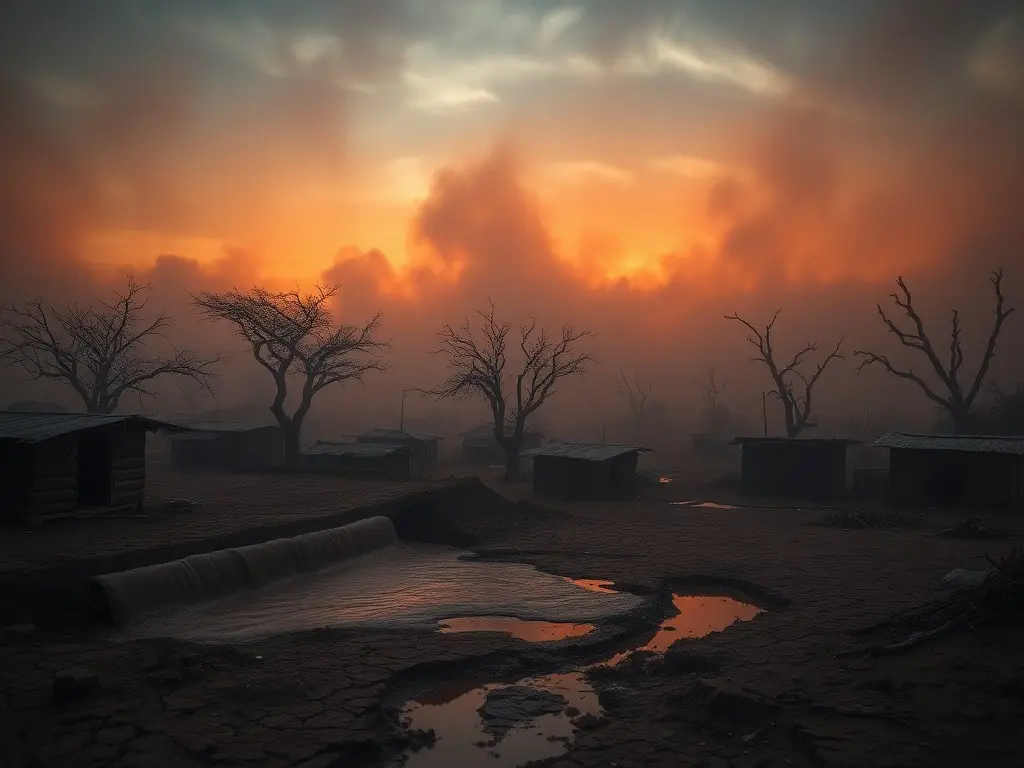
A study by the University of Cape Town found that 40.3% of Cape Town’s population—1.9 million people—live in areas with high or very high air pollution risk, disproportionately affecting poor and informal settlements. Climate change has intensified extreme rainfall events by 40% in southern Africa, worsening flooding and drought impacts on vulnerable communities with limited resources to recover.
South Africa’s poorest communities face the worst environmental hazards, with climate change exacerbating existing inequalities. A University of Cape Town (UCT) study revealed that 1.9 million residents—40.3% of Cape Town’s population—live in high or very high air pollution risk zones, concentrated in informal settlements and historically disadvantaged areas. These communities already struggle with inadequate housing, poor healthcare access, and proximity to pollution sources, creating overlapping risks. Researchers highlight a phenomenon called 'environmental justice,' where vulnerable populations bear greater environmental burdens while lacking resources to protect themselves. Dr. Meryl Jagarnath of UCT’s Division of Environmental Health noted that conventional air quality assessments often ignore social conditions that worsen health outcomes. Beyond air pollution, climate change has intensified extreme weather in southern Africa. A 2025/26 summer analysis by World Weather Attribution found that extreme rainfall events—linked to deadly flooding—are now 40% more intense than in pre-industrial times. Poorer communities suffer the most, as their homes are often in flood-prone or unstable areas with limited infrastructure. South Africa’s 32.4% unemployment rate in 2025 further restricts households’ ability to adapt. Droughts also pose severe threats, particularly in regions like the Western Cape, where recent dry spells disrupted livelihoods and food security. The South African Medical Research Council (SAMRC) warned that air pollution remains critical in the Highveld, Vaal Triangle, and Waterberg-Bojanala areas, exceeding national standards and endangering public health. The overlap of climate disasters and socioeconomic inequality underscores systemic vulnerabilities. While wealthier areas may mitigate risks, poorer communities lack resources to recover, deepening environmental and health disparities. This World Environment Day, experts emphasize the need for targeted policies to address these inequities.
This content was automatically generated and/or translated by AI. It may contain inaccuracies. Please refer to the original sources for verification.