XPENG CEO Leads Humanoid Robot Push as Mass Production Nears
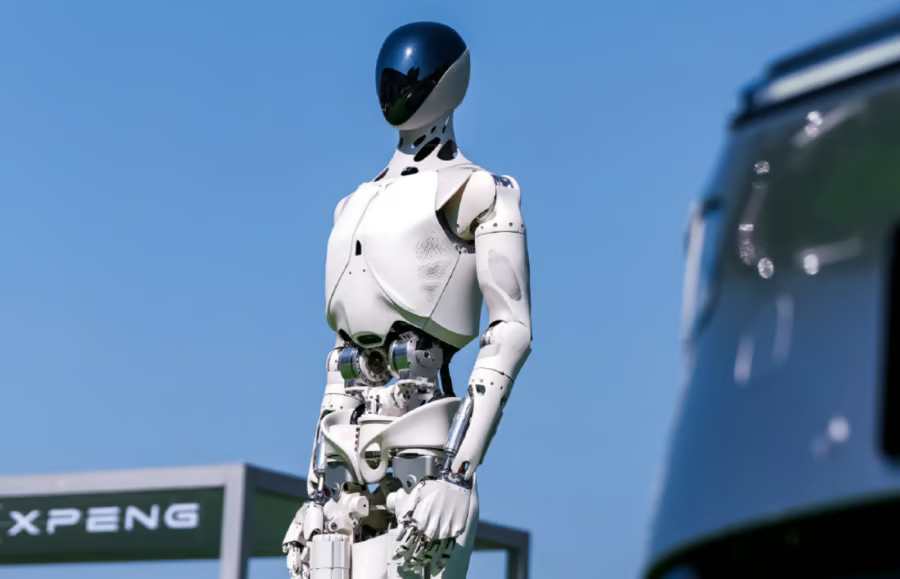
XPENG Group CEO He Xiaopeng will personally lead the company's robotics division as it prepares for mass production of its IRON humanoid robot by late 2026, aiming for over 1,000 units monthly. The move comes amid financial strain in XPENG’s core electric vehicle business and heightened competition in China’s ‘physical AI’ sector, with pilot deployments planned for early 2027.
XPENG Group’s Chairman and CEO He Xiaopeng will take direct leadership of its robotics division, accelerating the push for mass production of the IRON humanoid robot. The company targets late 2026 for production, starting with over 1,000 units per month and scaling to 50,000 annually by 2028, with pilot deployments in retail stores slated for early 2027. The shift reflects XPENG’s broader strategy to expand beyond electric vehicles into ‘physical AI,’ including humanoid robots, robotaxis, and flying vehicles. Earlier this year, the company rebranded from XPENG Motor to XPENG Group to emphasize this technological diversification. He Xiaopeng stated in an internal memo that success in robotics demands rigorous execution and high decision-making, highlighting the industry’s growing competitiveness. The IRON robot, unveiled last year, will rely on XPENG’s expertise in AI, hardware, manufacturing, and global marketing. The company also confirmed the resignation of senior robotics executive Shi Xiaoxin, though details were not disclosed. Despite financial challenges—including a 17.6% year-over-year revenue drop in Q1 2026—XPENG remains optimistic about China’s humanoid robot market growth, with industry analysts projecting sharp expansion through the decade. Competitors like UBTECH are also advancing, with preorders open for their U1 household humanoid robot, signaling broader industry momentum beyond factory and retail applications. XPENG’s aggressive timeline underscores its ambition to compete in China’s rapidly evolving robotics landscape while balancing its struggling EV business.
This content was automatically generated and/or translated by AI. It may contain inaccuracies. Please refer to the original sources for verification.