Yehey.com - China’s Ambitious Drive to Lead Global Humanoid Robotics Innovation
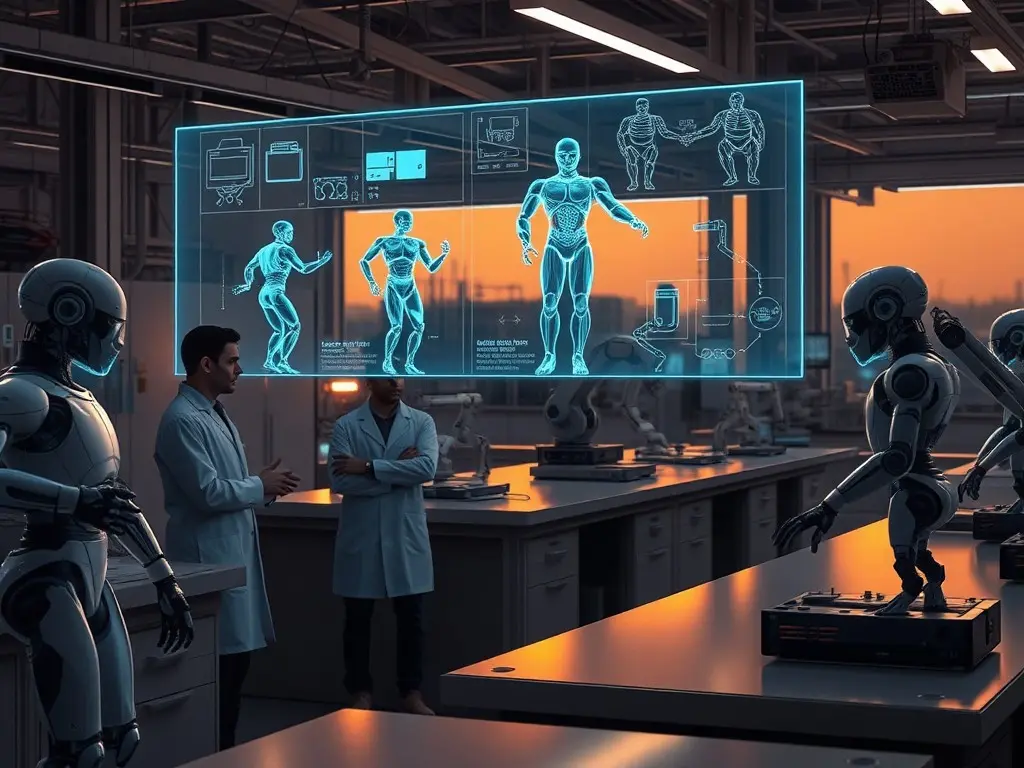
China is aggressively pursuing humanoid robotics through state-backed policies like *Made in China 2025* and a ¥1 trillion AI investment, aiming to dominate the sector with a ¥150 billion annual output goal by 2025. Leading universities such as Tsinghua and Zhejiang are advancing breakthroughs in dynamic walking, soft robotics, and human-robot interaction, while provincial incentives accelerate commercialization in healthcare, manufacturing, and service industries.
China has launched a coordinated push to lead global humanoid robotics, leveraging policy frameworks and research investments to accelerate development. The *Robotics Industry Development Plan (2021–2025)* targets an annual sector output of over ¥150 billion (~$22 billion), with a focus on humanoid applications. Under *Made in China 2025*, the government aims for 70% domestic content in high-end robots, while the *New Generation Artificial Intelligence Development Plan* allocates ¥1 trillion to AI-driven advancements, including perception and control algorithms for humanoid systems. Provincial incentives—such as tax rebates and subsidized R&D parks in Guangdong, Jiangsu, and Shanghai—further fuel growth, offering up to 50% grant coverage for development costs. Leading universities are central to China’s progress. Tsinghua University’s State Key Laboratory of Intelligent Technology and Systems has developed bipedal prototypes capable of dynamic walking and stair climbing. Zhejiang University specializes in soft-actuated limbs for safer human-robot interaction, while Harbin Institute of Technology focuses on high-torque actuators and balance algorithms. Shanghai Jiao Tong University integrates computer vision and natural language processing to create socially aware humanoids. These institutions produce over 300,000 engineering graduates annually, reinforcing China’s talent pipeline. The applications targeted by China’s humanoid robotics strategy span critical sectors. In healthcare, robots assist with patient mobility and elder care, while manufacturing and logistics benefit from dexterous assembly and warehouse navigation. Service and hospitality sectors are also prioritized, with robots designed for multilingual concierge services and routine check-ins. Education and research platforms further explore human-robot interaction and AI safety, positioning China to shape labor, safety, and automation standards globally. Financial support underpins this ambition, with low-interest loans and fast-track approvals for humanoid prototypes in public spaces. Guangdong, Jiangsu, and Shanghai offer specialized funding for R&D parks, while national grants cover up to half of development expenses. The strategy aligns with broader AI and industrial goals, ensuring China’s dominance in a field poised to redefine human-machine collaboration. Industry analysts note that China’s approach—combining policy, academia, and private-sector collaboration—creates a self-reinforcing ecosystem. By 2025, the country aims to achieve commercial viability in humanoid robotics, leveraging its scale and state-backed resources to outpace competitors. The focus on real-world deployment, from healthcare to manufacturing, underscores China’s intent to transition from research to global leadership in this transformative technology.
This content was automatically generated and/or translated by AI. It may contain inaccuracies. Please refer to the original sources for verification.