Young South Africans take up sustainable agriculture for food security
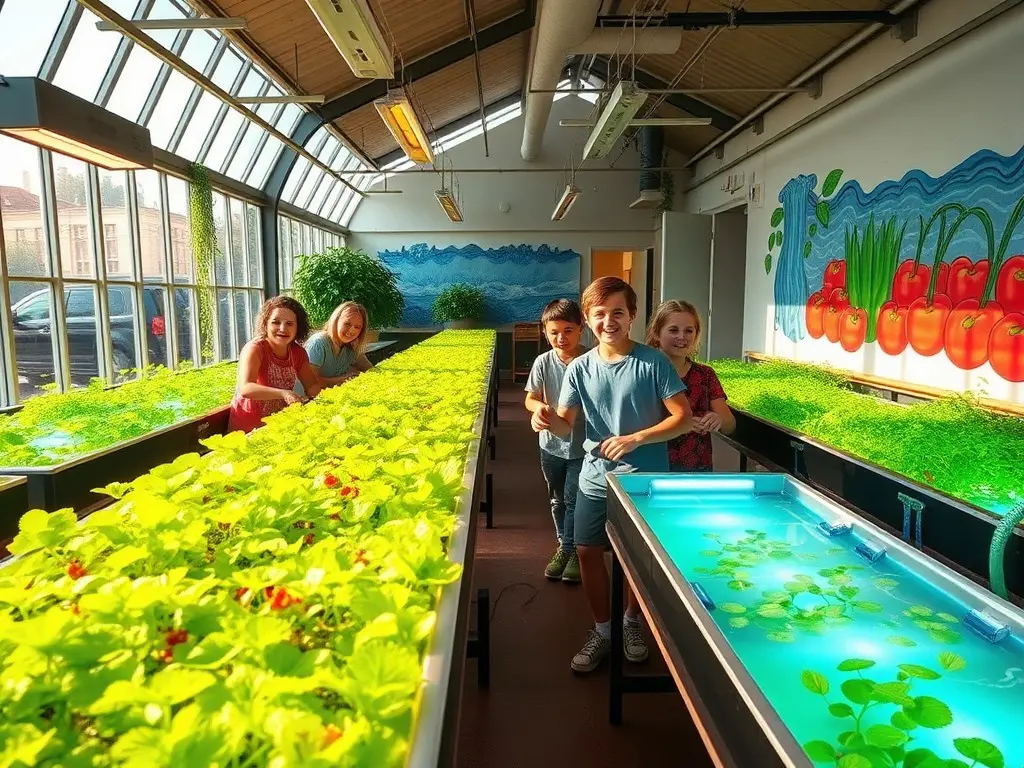
South African students at Laerskool Kempton Park are learning aquaponics to combat food insecurity, with INMED’s ‘plug and play’ system producing over 5,300 kg of food quarterly. The government-backed initiative, supported by UNDP funding, aims to address water scarcity and youth unemployment while integrating the method into school curricula nationwide.
South African students at Laerskool Kempton Park, near Johannesburg, are studying aquaponics—a sustainable farming technique combining fish and plant cultivation—to tackle food insecurity. The method, introduced by the South African government seven years ago, uses fish waste as nutrients for plants in a recirculating water system, eliminating the need for soil or chemical fertilizers. The program targets a country where 19.7 million people face moderate food insecurity. INMED, a nonprofit supporting vulnerable communities, developed a modular ‘plug and play’ aquaponics system with funding from the UNDP-Adaptation Fund Climate Innovation Accelerator. The system includes a 2,000-litre fish tank powered by solar energy, designed for easy replication in schools. Unathi Sihlahla, INMED’s director, noted the system addresses multiple challenges, including limited access to nutritious food, water scarcity, and youth unemployment. Schools using the system have produced vegetables and fish for school meals or nearby households, with over 5,300 kg harvested quarterly. The initiative is expanding across South Africa’s provinces, with plans to collaborate with the Eastern Cape Department of Education. INMED is also scaling the model in Tanzania. By integrating aquaponics into the school curriculum, the program aims to create sustainable food sources while teaching agricultural skills to youth. The system’s efficiency is critical in regions like Johannesburg’s townships, where space is limited, and the Northern Cape, where droughts threaten traditional farming. INMED’s design ensures minimal water use and no reliance on arable land, making it adaptable to diverse environments.
This content was automatically generated and/or translated by AI. It may contain inaccuracies. Please refer to the original sources for verification.